Finding Your People: Why Peer Connection is Vital for Neurodivergent Adults
If you are a neurodivergent adult, you might be intimately familiar with the feeling of speaking a slightly different language than everyone else in the room. Navigating a world designed by and for neurotypical minds can often feel like playing a complex game where everyone else was handed the rulebook, and you were left to figure it out through trial and error.
Over time, that constant friction—the sensory overwhelm, the miscommunications, the pressure to mask your natural traits—can lead to profound isolation. But there is a powerful antidote to that loneliness: finding your people.
Connecting with other neurodivergent adults who share similar lived experiences isn't just a nice addition to your social life; it is a vital component of mental well-being and radical self-acceptance. Here is why finding a community that truly understands you is so transformative.
The Heavy Weight of Isolation
For many autistic individuals, ADHDers, and adults with developmental disabilities, isolation doesn't always mean being physically alone. You can be surrounded by colleagues, acquaintances, and even well-meaning family members, yet still feel entirely unseen.
This happens because standard social advice often doesn't apply to neurodivergent brains. When you struggle with executive dysfunction, sensory processing, or social fatigue, the neurotypical response is often to offer solutions that simply don't work for you (like "just use a planner!" or "just put yourself out there!"). Constantly translating your needs for people who don't intuitively grasp them is exhausting, which often leads to withdrawing entirely.
The Profound Relief of Shared Experience
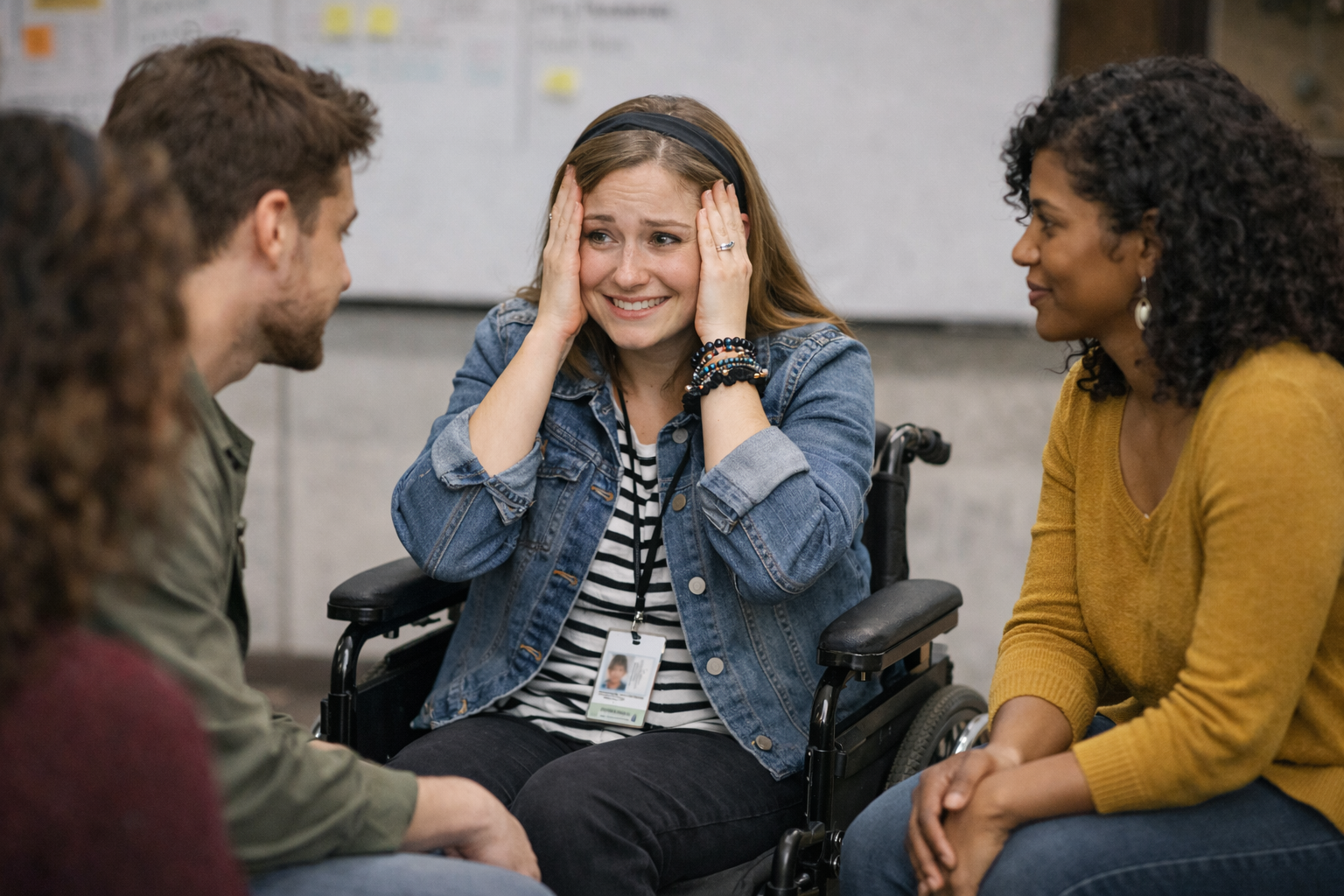
There is a unique, deeply settling magic that happens when you sit in a room—virtual or physical—with people whose brains operate like yours.
When you connect with neurodivergent peers, you no longer have to explain why the hum of the fluorescent lights is distracting, or why you need to fidget to focus. You don't have to justify your hyper-fixations or apologize for your communication style. The baseline of the relationship shifts from "let me explain myself" to "you already know."
The Real-World Benefits of Peer Connection
Building a neurodivergent community offers tangible, life-changing benefits that are hard to replicate in individual therapy alone:
A Safe Space to Unmask: Peer spaces are often the first environments where adults feel truly safe to drop the exhausting performance of masking. You can stim freely, avoid forced eye contact, and communicate directly without fear of judgment.
Trading Real "Life Hacks": Neurodivergent peers are the best source of practical advice. They offer strategies that actually work for divergent brains, sharing how they navigate burnout, employment, and daily tasks without shame.
Dismantling Internalized Shame: When you hear someone else describe the exact same struggles you have secretly judged yourself for, the shame begins to dissolve. You realize these aren't personal moral failings; they are simply the realities of living in a world not built for your neurotype.
You Don't Have to Navigate It Alone
Finding your people can take time, but the validation and solidarity waiting on the other side are well worth the effort. You deserve spaces where your authentic self is not just tolerated, but celebrated and deeply understood.
Looking for a community that truly 'gets it'? Explore our upcoming Group Therapy sessions and connect with a supportive network of peers.